The climatic characteristics of the Black Sea Region create the most ideal environment for hazelnuts. The hazelnut is the only plant that flowers and is pollinated during the winter months. The sepals of the female flowers form the hazelnut husk, known as the “çotanak.” There are various species of hazelnut. The cultivated hazelnuts in our country can grow to 5-6 meters in height. They are hybrids of the species ‘Corylus Avellana’ and ‘Corylus Maxima’.
Hazelnuts ripen in August and, after being harvested and dried, are brought to market and offered for sale in September and October. The organized purchasing of hazelnuts produced in Türkiye is carried out by Fiskobirlik, the largest producer union. Fiskobirlik puts the hazelnuts it purchases through various processes and offers them for consumption.
Hazelnut Production Areas
The hazelnut tree, which grows on earth between the 36˚-41˚ northern latitudes and under its own particular climatic conditions, bears fruit in areas no more than 30 km inland from the coast and at altitudes not exceeding 750-1000 meters. Türkiye, Italy, Spain and the United States are the principal hazelnut-growing countries.
Türkiye accounts for approximately 65-75% of annual world production.

Turkish Hazelnuts
In terms of quality, Turkish hazelnuts are divided into two categories: Giresun and Levant
Giresun quality hazelnuts are the finest hazelnuts on earth in terms of their taste and oil content. They are grown in Giresun and in the Beşikdüzü and Vakfikebir districts of Trabzon.
Levant quality hazelnuts contain less oil. They are grown in part of Trabzon and in the provinces of Ordu, Samsun, Bolu, Sakarya, Zonguldak and Bartin.
Hazelnuts of All Kinds!
Known and recognized for approximately 5 thousand years, hazelnuts are divided into three main groups.
In-Shell Round (Tombul) Hazelnuts: Tombul, Palaz, Mincane, Gök, Kalinkara, Kan, Cavcava and Delisava (Çakildak)
In-Shell Pointed (Sivri) Hazelnuts: Sivri, Incekara, Kuş.
Other In-Shell Hazelnuts: Badem, Foşa, Kargalak, Ordu Ikizi.
Hazelnut farming is generally carried out on small plots of land and in the form of family businesses. It is known that approximately 400.000 farmers are engaged in hazelnut production on roughly 600.000 hectares of land in Türkiye. Hazelnuts directly or indirectly concern a population of 8 million in the region where they are grown.
In the Black Sea Region, the land slope is mostly above 20%, and this is the region of Türkiye that receives the most rainfall. The soil structure and climatic conditions do not permit any agriculture other than hazelnuts in a significant part of the Black Sea Region. Hazelnut farming in this region, which faces a considerable risk of erosion, prevents fertile soils from eroding and makes a very positive contribution to the environment. Furthermore, hazelnut processing plants do not generate physical or chemical waste that causes the degradation of the natural environment.
Initially consumed as a snack nut, the range of uses for hazelnuts has expanded with the development of the food industry.
Hazelnuts are used intensively in the manufacture of chocolate, biscuits, confectionery, cakes and pastries, and ice cream. The world’s annual consumption of hazelnut kernels in chocolate and biscuit manufacturing has exceeded 300.000 tons.
Hazelnut flour is a fundamental ingredient of chocolate products.
The hazelnuts, hazelnut spread, Nuga and Nutkrem that Fiskobirlik markets in its special packaging are food products with high nutritional value.
Hazelnuts and hazelnut products are especially recommended by experts for children’s nutrition.
Ever since humankind settled down and began practicing regular agriculture, it has regularly sown and planted many plants. The hazelnut is one of these plants. Twelve different varieties of hazelnut are grown in Türkiye.
The average values in the general composition of the hazelnut have been scientifically determined. The oil in hazelnuts consists largely of unsaturated fatty acids. This oil, at a rate of 60-70%, is entirely beneficial to the body. Hazelnut oil performs many functions, from maintaining body temperature to transporting fat-soluble vitamins. The linoleic acid in hazelnut oil is not produced by the body and must be obtained from external sources. Linoleic and oleic acids prevent cholesterol from rising in the blood and have a protective effect against cardiovascular diseases.
Hazelnuts are a rich source of carbohydrates and oil beneficial to the human body, as well as B-group vitamins that regulate the metabolism. Vitamins B2 and B6, which are necessary for blood formation and mental health, are of great importance in the nutrition of growing children.
One of the best foods for the health of the heart and other muscles is the hazelnut, which is very rich in vitamin E. This vitamin is necessary for the health of the heart and other muscles and for the normal functioning of the reproductive system. By preventing the breakdown of red blood cells, it has a protective effect against anemia. Vitamin E prevents the formation of carcinogenic agents or protects the body by neutralizing them after they have formed.
Hazelnuts are one of the best plant sources of calcium, which is necessary for the formation of bones and teeth; iron, which plays a role in blood formation; and zinc, which plays a role in growth and the development of sex hormones. They are also rich in potassium, which is necessary for nerve stimulation and the functioning of muscle tissue. With their high potassium, magnesium and calcium content and low sodium content, hazelnuts are of great importance for bone development and health and for the regulation of blood pressure. In this respect, too, hazelnuts are important for a healthy life.
Nutrition experts generally recommend giving more room to hazelnuts and hazelnut products in the daily diet, and point out that they are a major source of energy, particularly for children, young people, athletes, soldiers and workers.
The extent to which 100 gr of hazelnut kernels meets the requirements of a worker with moderate-to-high activity (3500 calories) is as follows.
The Hazelnut Inside and Out! Anatomy of the Hazelnut
Vitamins in Hazelnuts (mg/100gr): 0.33 Vitamin B1, 0.12 Vitamin B2, 1.75 Niacin, 0.24 Vitamin B6, 31.4 Vitamin E
Minerals in Hazelnuts (mg/100gr): 5.8 Iron, 160.0 Calcium, 2.2 Zinc, 655.3 Potassium, 2.1 Sodium, 161.2 Magnesium, 1.3 Copper, 5.1 Manganese.
Uses of Hazelnut Kernels: 80% is used in the chocolate industry (chopped, sliced or ground) and in the production of biscuits, confectionery, desserts, pastries and ice cream. Hazelnuts that cannot be marketed domestically or exported are used for oil extraction. They are also consumed as a snack.
Composition of Crude Hazelnut Oil
Uses of Crude Hazelnut Oil:
In addition, the cake remaining after oil extraction has a high protein content (38-45%) and is used as animal feed in the feed industry.
Uses of Hazelnut Shells:
Uses of Hazelnut Leaves:
-Hazelnut leaves and husks are returned to hazelnut orchards and agricultural land as natural fertilizer.

Fiskobirlik was established to create continuous sales opportunities and markets for its members’ products, to bring stability to the market, to make the best use of domestic and international markets for hazelnuts, to develop hazelnut production through control and scientific methods, to provide means of production, to encourage the delivery of high-quality products that meet standards, to promote the domestic consumption of hazelnuts, to increase hazelnut exports, and to develop product diversification and development projects for this purpose.

Fiskobirlik serves as the safeguard of more than 210,000 members affiliated with 49 cooperatives from Istanbul to Artvin, and of the country’s hazelnut crop. It has 17 hazelnut cracking plants, one of which is located within the Integrated Plant, a storage capacity of approximately 300 thousand tons, and a projected daily production capacity of 645 tons of hazelnut kernels. With its 3,000 employees and its ISO 9002 International Quality Certificate, it is the largest and strongest organization in its sector in the world.
Since its foundation, it has been the guarantor of Turkish hazelnut growers and of Turkish hazelnuts. Through the role it has assumed in ensuring the production-consumption balance and in resolving all the problems faced by growers, it has attained an even more effective position in recent years.
The new systems emerging in the global economy and the quality requirements being sought are closely monitored by Fiskobirlik. In the marketing of Turkish hazelnuts, Fiskobirlik bears great responsibility toward both growers and the country.
Fiskobirlik holds an important position in Türkiye and in the world. It is the strongest organization serving in the cultivation of hazelnuts, their purchase from growers, their processing and their delivery to consumers. It is the safeguard of all growers, whether members or non-members.
From time to time it fulfills the role of a funding source by extending loans under the names of support credit or advance credit; it frequently supplies various tools, equipment and agricultural inputs; and it carries out educational activities to improve the culture of production. The Union is not only a market where all hazelnut growers can sell their products, but it is also able to provide a guarantee on price. In years of high production, products that cannot be purchased by the private sector are bought by Fiskobirlik, which “Provides a Market Guarantee to its Growers.” Fiskobirlik, which scientifically determines the hazelnut crop estimate and the harvest date in Türkiye, sets standards by applying a specific system in its hazelnut purchases.
Carrying out effective and meticulous quality control at every stage of hazelnut purchasing and processed hazelnut production is an unchanging rule of Fiskobirlik.
Initial checks are carried out by hazelnut experts at the time of purchase in order to determine kernel yield, wastage and physical properties.
In addition to the monthly physical checks carried out by purchasing teams on the hazelnuts in the warehouses, physical and chemical tests are performed by regional quality control laboratories every 6 months on new-crop products and every 3 months on old-crop products. These tests are carried out by the quality control laboratories established in Giresun (Headquarters), Tirebolu, Görele, Trabzon, Ordu, Ünye, Fatsa, Terme, Düzce, Akçakoca, Cumayeri, Kocaali and Karasu. Apart from these routine checks, aflatoxin and radiation analyses are performed on request, and microbiological analyses are carried out in the microbiology laboratories established at the headquarters.
Quality control operations at the Integrated Hazelnut Processing Plant are carried out by the Quality Control Laboratories located within the plant itself.
Quality control operations at the Integrated Hazelnut Processing Plant are carried out by the Quality Control Laboratory located within the plant itself.
Among the hazelnuts and hazelnut products produced at Fiskobirlik, the praline carries the TSEK certificate and all other hazelnuts and hazelnut products carry the TSE certificate; consequently, all products are manufactured under brand guarantee and subject to control.
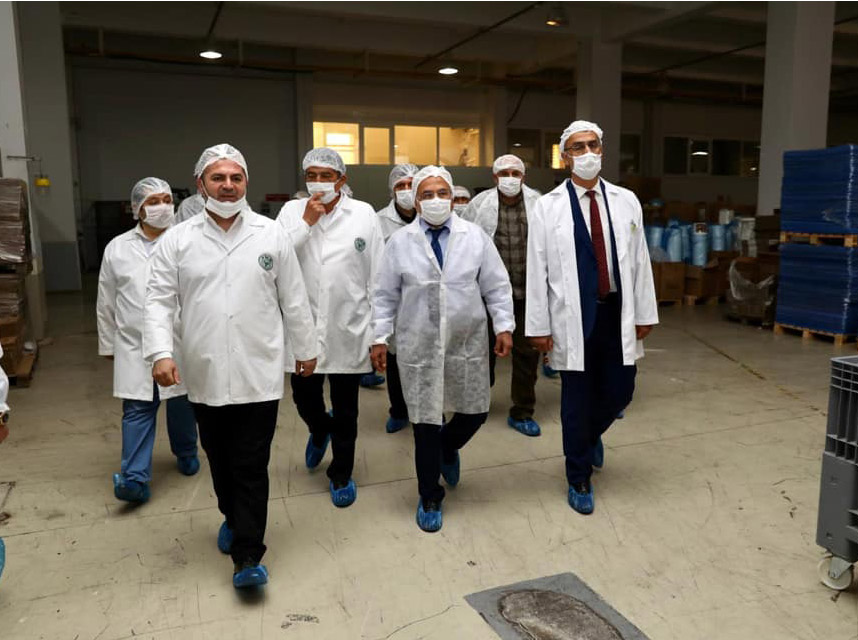
Fiskobirlik established the “Integrated Hazelnut Processing Plant” in 1981 with the aim of increasing product quality and variety by processing the hazelnuts produced in our country, offering new flavors to the palate, and making a greater contribution to the national economy through raw, semi-processed and finished products.
The plant, built on a total area of 127,000 m² in Giresun, comprises an administrative building, a weighing unit, a 2,200-ton pre-silo, a 2,000-ton sorting silo, a hazelnut cracking factory, a hazelnut kernel silo, a fumigation unit, a hazelnut processing and packaging factory, a quality control laboratory, social facilities, warehouses and staff housing.
The largest and most important unit of the Integrated Hazelnut Processing Plant is the “Hazelnut Processing Factory.” Built on an area of 6,120 m², this factory has an annual processing capacity of 33,420 tons of hazelnut kernels (based on 8 hours a day and 300 days a year).
All operations at the Integrated Hazelnut Processing Plant are carried out automatically. This factory has been designed in a way that also allows new units to be brought into operation.